Assessing Enterprise Risk: Key Training for the Next Generation of Internal Auditors
November 16, 2026
by Dennis Applegate, CPA, CMA, CIA, CFE and Gabriel Saucedo, PhD
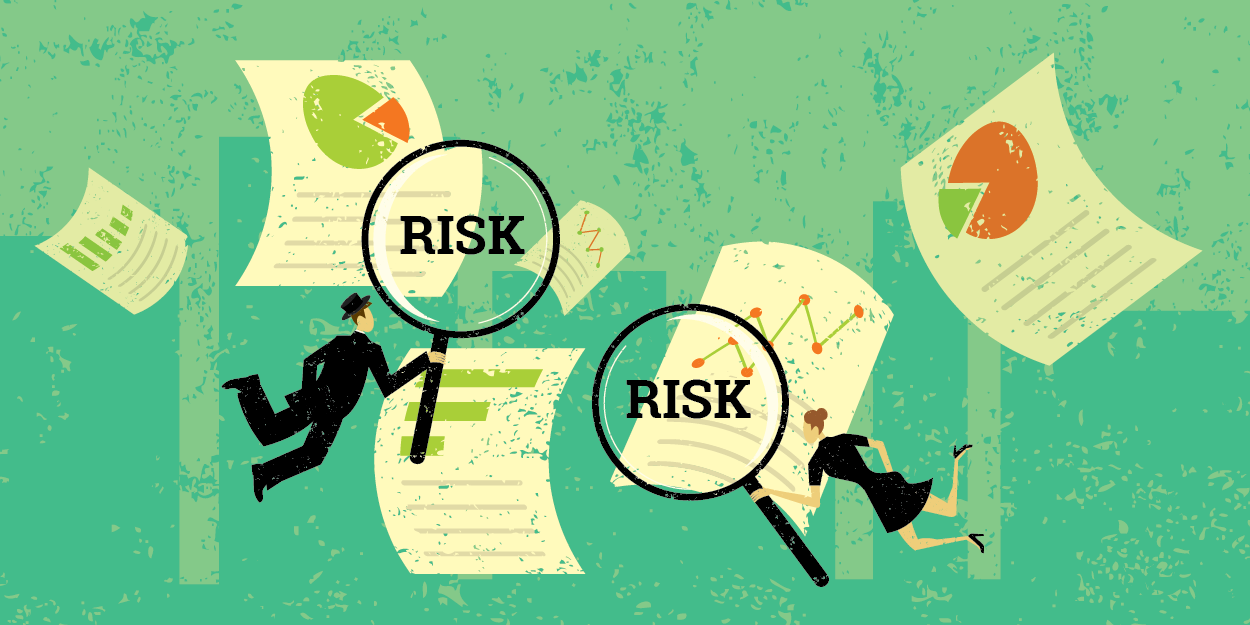
illustration: © iStock/retrorocket
Audit committees are expecting their internal audit functions to place greater focus on enterprise risk, increasing the importance of enterprise risk education to the internal audit profession. Concurrent with, and furthering, the need for such education, research indicates that the experience level of internal auditors is expected to decline in the near term.
To illustrate, demographic data from the 2022 Internal Audit Foundation report, Internal Audit: A Global View, which is based on a survey of over 3,600 practitioners in 159 locations, shows that the proportion of internal auditors under 40 years has declined 17 percentage points while the proportion of internal auditors over 40 years of age has increased 18 percentage points pushing the overall age of the profession much higher.1 If this trend continues, many senior audit leaders question whether the next generation of internal auditors will be sufficient to meet the demand. For this reason, the Institute of Internal Auditors (IIA) has partnered with more than 180 colleges and universities worldwide to enhance awareness of the profession and to assist professors and instructors provide internal audit courses and integrate internal audit education into their existing business curriculums.
For the past several years, and as a recognized Center for Internal Auditing Excellence by the Institute of Internal Auditors, Seattle University (SU) has offered Principles of Internal Auditing as a required course for a master’s degree in accounting and analytics. Although covering the internal auditing waterfront, the course is primarily designed to develop in students a risk and control mindset, the foremost internal audit attribute desired by audit committees based on PwC’s 2023 Global Internal Audit Study.2 Historically, internal controls have been at the forefront of the profession; while risk, especially enterprise risk, namely the risk to achieving a firm’s strategy, has received less attention. Indeed, enterprise risk was not formally incorporated into the auditing literature until 2004 with the release of COSO Enterprise Risk Management (ERM) – Integrated Framework. Until then, much of the regulatory attention and industry standards focused on control risk, not strategic risk. However, corporate focus on enterprise risk has risen significantly since the release of the 2017 updated COSO ERM framework that integrated strategy-setting and performance. Today, enterprise risk now appears to be at top of mind for the profession. In KPMG’s 2023 Audit Committee Survey Insights, 62% of committee respondents want greater focus by their internal audit function on critical enterprise risks, the highest response rate by far to the question: In what ways can the internal audit function increase its value to the audit committee?3 For this reason, students in auditing are taught that the board and senior management view the world in terms of strategy and the likelihood and impact of not achieving it. While not discounting the importance of adequate and effective internal controls, internal audit thought leaders, in particular, have recommended that the profession might convey audit findings more effectively by talking less with client management about internal controls and more about what matters to senior executives; i.e., risks to earnings targets, market share, major projects, reputation, and so forth; in other words, enterprise risk.
In SU’s internal audit principles course, class lectures and discussion of enterprise risk culminates in a team-oriented, student project designed to emulate the annual internal audit risk assessment required by Global IIA Standards, including the development of a master audit plan and schedule based on the results of the assessment. As part of final course grading, each team presents its internal audit risk assessment and master audit plan to a hypothetical “audit committee” for evaluation. The committee, composed of senior audit professionals from Boeing, Deloitte, PwC, Microsoft, and Protiviti, among others, critique each project based on the thoroughness of the risk assessment, including its underlying rationale and the facts and data that support it. In its evaluation, the committee also concentrates on the relationship between the key risks affecting achievement of the firm’s strategies and the projects proposed in the master audit plan, and whether the plan makes logical sense based on the assessed risk.4
Firms selected for analysis are typically publicly held and locally based (so that students can take advantage of the local media coverage) and include such corporate giants as Amazon, Alaska Airlines, Boeing, Costco, PACCAR, and Starbucks. Because the class project focuses more on risk assessment than risk management, students are not obligated to assess the propriety of their firm’s risk response. Under the COSO ERM model those responses may include accepting the risk as is; avoiding it, for example, by disposing of a business segment or ceasing a product line; sharing the risk with another firm in a joint venture or similar strategic business alliance; or reducing the risk by adding new or expanded internal controls. Typically, such information is too proprietary for students to access in public media. However, they are able to identify the enterprise risk to a firm’s strategy by reviewing the relevant SEC Form 10-K and then assessing risk by likelihood and impact as objectively as possible through Internet or library research. For this reason, the firms that students select for analysis of enterprise risk must be publicly traded.
With the facts and data at hand, students brainstorm enterprise risk scenarios in their project teams, as is customary for the audit industry. Concurrently, senior audit professionals who serve as guest lecturers stress to each team the importance of logical reasoning when thinking through the significance of the events affecting the firm. They further emphasize that in professional practice internal auditors often must speculate about the likelihood and impact of a perceived risk if facts and data are not readily available. Accordingly, it is student reasoning that often supports the final list of assessed risks, as much as it is their research of facts and data, and to the extent that it does, these class projects closely mirror the professional judgment required in internal audit practice.
Students present their audit risk assessment and annual audit plan to the “audit committee” in a manner similar to the work of an internal audit professional: During these presentations, students learn, through real-time, “audit committee” critiques, how to improve both their analysis of risk and their ability to communicate analytical results. Unlike a Chief Audit Executive (CAE) risk assessment presentation, however, student presentations must be adjusted to provide an overview of the firm including its strategy, business objectives and relevant industry highlights—facts and data that the “audit committee,” unlike a normal audit committee, may not already know. Students also present an analysis of the firm’s competitors and any associated risks to the firm’s strategy and objectives, information a CAE might not necessarily furnish depending on the nature of the risk assessment.
From that point forward, team presentations tend to mirror those in the internal audit industry, focusing on an analysis of external and internal factors that pose risks to the firm, and displaying the analytical results in a heatmap that shows the likelihood and impact of each risk. Heatmaps, the preferred technique to report assessed risk, are required in the student presentations to replicate professional internal audit practice. The heatmap and a listing of the risks in descending order of severity [likelihood (x) impact] provide a basis for “audit committee” questions and critiques concerning the nature of the risks and the underlying rationale for the risk score presented.
To conclude their presentations, teams provide the “audit committee” with a master audit plan and schedule, describing each audit project by scope and objective, detailing their timelines and the critical risks to be addressed.
Student presentations, like professional audit practice, must contain a clear line of sight from the firm’s strategies to its strategic risks and from its strategic risks to the proposed audit plan. Absent this sight-line, a passing grade becomes problematic. If a similar presentation in professional practice fails to show direct linkage between the firm’s strategies, assessed risks, and proposed audit projects, then the master audit plan would tend to lose business relevance and credibility with the board and senior management. Therefore, students are taught that it is not just their research data but also the logical flow of their analysis—from strategy to risks and from risk assessment to the audit projects in the master audit plan—that determines success. The clarity of their reasoning will drive the audit committee’s evaluation of their presentation.
Teaching students how to assess enterprise risk and prepare a master audit plan gives them insights into not only the work of the internal audit profession but also its career-enhancing potential. For example, the “audit committee” will typically discuss the benefits of internal auditor interaction with senior management, creating visibility of the auditor’s work effort. Also discussed is the diversity of the internal audit work itself, namely, the numerous types of business processes examined, and the wide variety of company locations covered. Committee members may also highlight the benefits of CPA licensure and CIA certification. These classroom discussions with internal audit professionals are an important component of the instructional model, helping students to define, in part, a possible career track in internal auditing.
Therefore, in addition to teaching enterprise risk analysis, the course helps students jumpstart their professional career and, for those students who choose internal auditing, the profession is rewarded with a new complement of internal auditors to replenish an aging internal auditor pool.
Interested professionals should feel free to contact us at any time if they would like to serve on the audit committee or as a guest lecturer for the class.
Dennis Applegate, CPA, CMA, CIA, CFE, is an associate clinical professor of accounting in the Albers School of Business and Economics at Seattle University. Contact Dennis by email.

Gabriel Saucedo, PhD, is an associate professor of accounting and chair of the accounting department in the Albers School of Business and Economics at Seattle University. Contact Gabriel by email.
References
- 2022 Internal Audit Foundation Premier Global Research Internal Audit: A
Global View. - PwC Global Internal Audit Study 2023: Seeing through walls to find new
horizons; Key Finding #4: IA’s Human ‘superpowers’ are more important
than ever. - 2023 KPMG Audit Committee Survey Insights, p. 19. Dive into our thinking:
Insights from 2023 audit committee survey - Dennis Applegate. “Training Tomorrow’s Internal Auditors.” Internal Auditor.
(October 2023): pp. 77-78.
Learn More
Join us at the Risk Management Conference on December 3, for a full day of relevant CPE designed to help you stay informed, prepared, and ready for what comes next.
This article was originally published in the Fall 2026 issue of The Washington CPA magazine.